
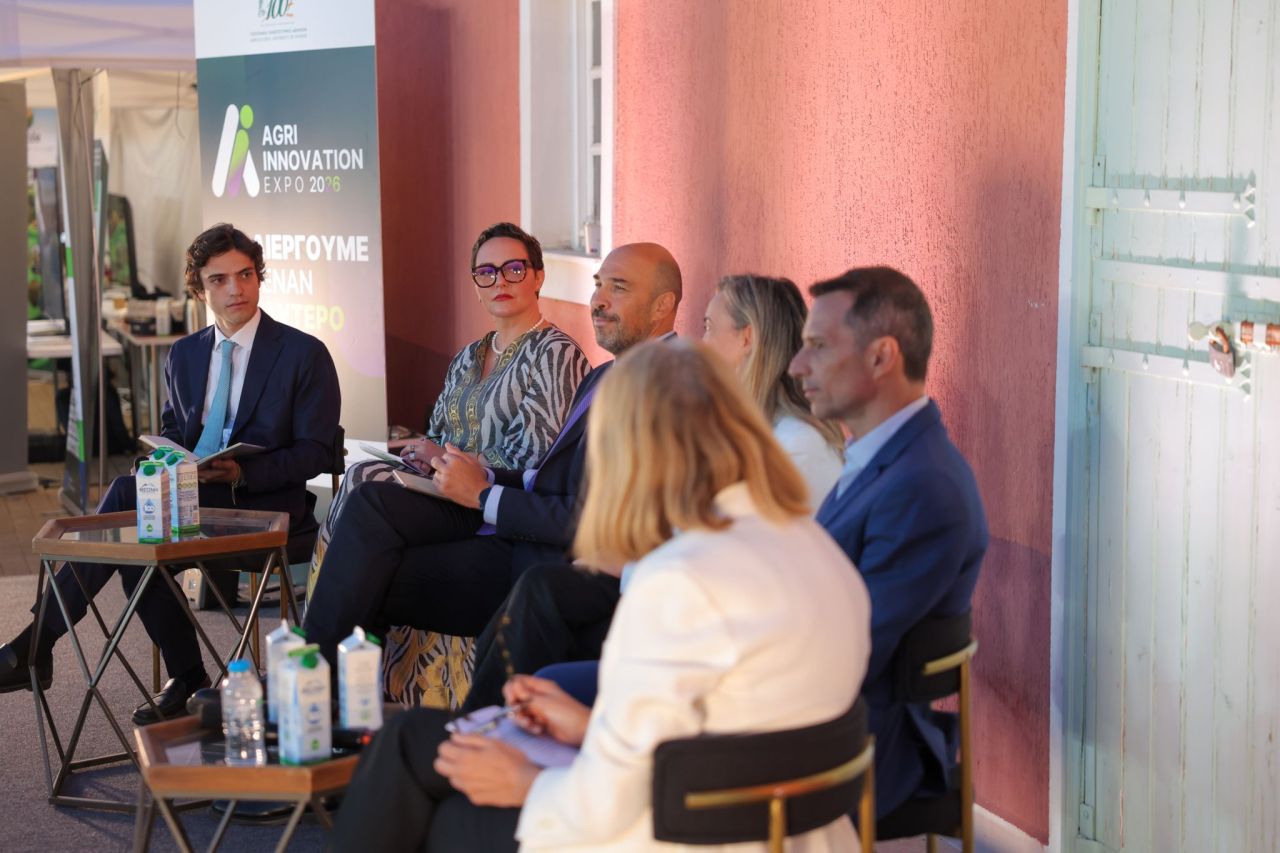
Greece has no shortage of good research. Its universities produce work that is scientifically rigorous, often world class, and increasingly relevant to the great challenges of our time, from food security and biodiversity to climate resilience and the energy transition. Yet the distance between a promising result in a university laboratory and a product that customers buy and investors back remains one of the most stubborn gaps in the innovation economy. Closing that gap was the subject of a panel moderated by Energon Green Solutions co-founder Marios Fokas at Agri Innovation Expo 2026, and the conversation offered a clear and encouraging picture of how that distance is being shortened.
A Showcase for Research with Real World Ambition
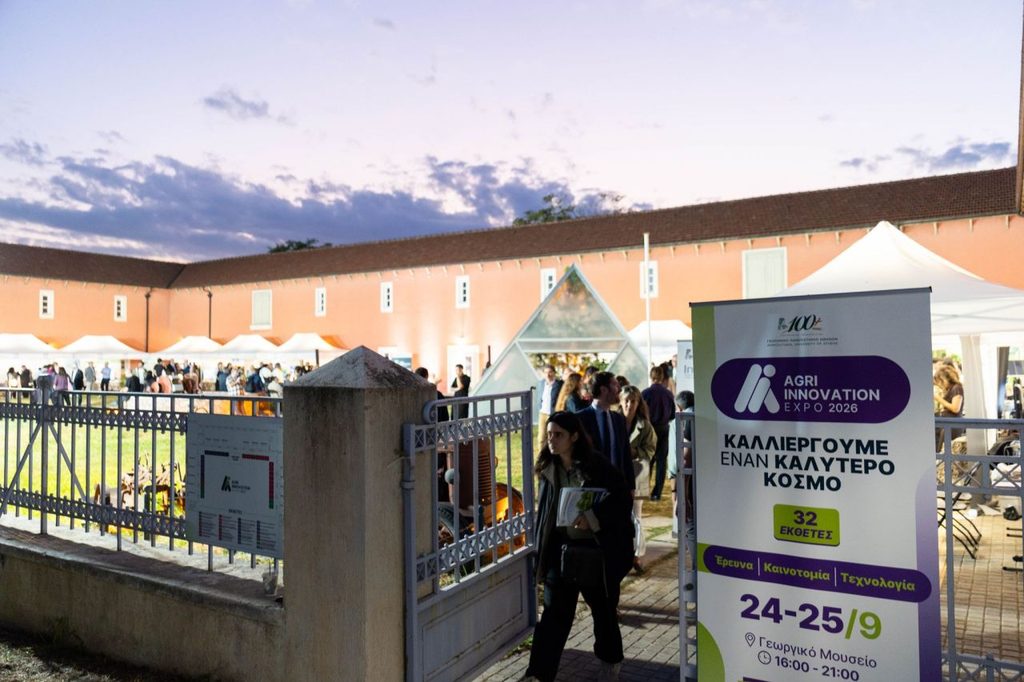
Now in its third edition, Agri Innovation Expo is the Research, Innovation and Technology Transfer Exhibition of the Agricultural University of Athens, an institution with more than a century of contribution to Greek agriculture and science. This year’s exhibition took place on 24 and 25 September in the grounds of the Agricultural Museum on Iera Odos, bringing together researchers, entrepreneurs, investors, policymakers and the wider public.
The expo was organised by InnovinAgri, the University’s Office of Innovation, Entrepreneurship and Technology Transfer, as part of the ROMVOS Technology Transfer Network. ROMVOS is a collaboration between the Agricultural University of Athens, Panteion University, the University of Piraeus and the University of Thessaly, created to strengthen technology transfer and help research results find their way into the economy. The format reflected that mission directly. Thirty two exhibiting teams presented mature research results, university spin offs and flagship projects addressing plant protection, genetics, the bioeconomy, food production and supply chains, and sustainable energy and biotechnology.
Energon extends its sincere thanks to Katerina Papadouli and Thomas Bartzanas for the kind invitation and for the work that made the expo possible.
Five Perspectives on One Journey
The panel, titled “Support Ecosystems: Bridges between Academic Research and Markets”, was designed around a simple premise. A research origin company does not move from lab to market with the help of a single actor. It needs different forms of support at different stages, and each of those forms comes from a different part of the ecosystem. To capture that range, the session brought together five speakers representing advisory, commercial banking, economic diplomacy, national development finance and European level capital.
Joining the conversation were Marianna Nathanail of the European Investment Bank, Dr Kyriaki Bakirtzi of the Hellenic Development Bank, Rannia Savvaki of the Embassy of the Netherlands in Greece, Nicolas Dedousis of Piraeus Bank, and Fragiskos Theofylaktos of Prisma Consulting Athens. Guided by Marios Fokas, the discussion moved through each of these layers in turn, asking not only what each actor offers but how their contributions fit together.
Turning Results into Something Investable
The conversation began where many research journeys stall. A laboratory result, however impressive, is not yet something an investor can assess or a client can buy. The panel highlighted the role of targeted advisory in translating scientific achievement into the language of markets: clarifying the value proposition, identifying the right customers, structuring the business and preparing the evidence that investors need. Done well, advisory is often the first real bridge a research team crosses, and it shapes every conversation that follows.
Banks Adapting to a New Kind of Client
Commercial banking might not be the first source of support that comes to mind for an early stage spin off, but the discussion made a compelling case for its importance. Banks bring financial discipline and a reach that few other actors can match, and the panel noted that they are actively adapting their tools and services to better serve companies that originate in research. For founders, this means that the banking relationship is increasingly something to build early rather than something to approach only once a company is mature.
Where Diplomacy Opens Doors
One of the most distinctive contributions came from the perspective of economic diplomacy. The panel explored how embassies and diplomatic networks can open doors that capital alone cannot, by connecting innovators with partners, markets and expertise abroad. The Netherlands offered a particularly instructive example. The Dutch triple helix model, which builds structured cooperation between universities, industry and government, has long been regarded as a benchmark for innovation ecosystems. Alongside it, the Orange Grove programme demonstrates how diplomatic channels and resources can be turned into real commercial traction for start ups. For Greek research teams with international ambitions, the lesson was that diplomacy is not a ceremonial layer of support but a practical one.
National and European Finance Stepping Up
The final part of the discussion turned to public finance, at both national and European level. On the national side, development finance is actively supporting and designing instruments aimed specifically at DeepTech and research origin companies. The significance of this should not be understated. It reflects a growing recognition that these companies follow different timelines, carry different risks and therefore deserve to be backed differently from conventional businesses.
At European level, the emphasis was on scale. European capital can support ventures at a magnitude that national systems alone often cannot, and the panel highlighted how its reach is expanding through new supporting tools and additional channels designed to bring funding closer to DeepTech founders. For a Greek spin off with the potential to grow across borders, these channels can be the difference between remaining a promising local company and becoming a European player.
The Strength Is in the Connections
Perhaps the most important insight of the afternoon was not about any single actor but about how they relate to one another. Each of the five speakers represented a vital piece of the support ecosystem, yet the true value emerged when those pieces were seen working together. When advisory prepares a company for investment, when banks and development institutions offer instruments suited to its stage, when diplomacy connects it to international markets and when European capital is ready to help it scale, the journey from lab to market becomes far more structured and predictable. Unnecessary friction falls away, and the opportunities and outcomes available to research origin start ups and spin offs are amplified considerably.
That is an optimistic message, and an important one for Greece. The building blocks are in place. The task now is to keep strengthening the links between them so that more researchers can make the leap from discovery to impact.
Why This Matters to Energon
At Energon Green Solutions, bridging innovation with the frameworks that allow it to grow is central to our work. Many of the agritech and climate tech ventures emerging from Greek universities are precisely the kind of companies that thrive when legal, financial and policy support are aligned around them. Conversations such as this one help build that alignment, and we are proud to have contributed by moderating the discussion.
Our warm thanks go to all five speakers for a rich and generous exchange of ideas, and our congratulations to all thirty two exhibitors for their fascinating work. We look forward to seeing many of these teams take their research further in the years ahead.